
Men's Health · Testosterone · Sexual Health · Prostate
Men's Health & Testosterone Therapy, Built on a Real Evaluation
Low energy, low drive, erectile changes or a PSA question deserve more than one lab value and a standard protocol. We find the cause, protect your fertility and your heart, and use testosterone therapy when it's the right answer, and something else when it isn't.
At a glance
Physician-directed. Every protocol set by Christian Badillo, MD.
Virtual visits wherever we're licensed. Hands-on exams coordinated locally when needed.
At-home blood draws in Chicagoland, parts of Northwest Indiana, Madison (Miami coming soon) or any Quest or LabCorp.
Membership optional. Start with a single visit.
Why we're different
A men's health practice, not a testosterone clinic
Many men find us after a quick visit elsewhere ended with a prescription and a standing injection schedule. Testosterone can be the right treatment. It should never be the automatic one.
What we help with
Focused care for the issues men actually bring us
Low testosterone
Confirmed with proper testing, then treated with replacement or by restoring your own production.
Erectile dysfunction
Evaluated as a possible early heart-health signal, with first-line treatment and a plan for the cause.
Low libido
Hormones, medications, sleep and stress reviewed before anything is prescribed.
Fertility-minded hormone care
Options that protect sperm production if you want children now or later.
Prostate health & PSA
Shared decision-making on screening, careful follow-up of abnormal results, and urology referral when needed.
Weight & metabolism
Body composition, insulin resistance and GLP-1 medication when it fits, with muscle protection built in.
Heart risk
ApoB, Lp(a), blood pressure, and coronary calcium scoring when it helps, with treatment matched to your risk.
Hair loss
Medical therapy to stop loss, planned around your fertility goals and your PSA.
Sleep & energy
Home sleep apnea testing. Untreated sleep apnea lowers testosterone and comes first.
Testing
How we confirm low testosterone
Testosterone peaks in the morning and varies from day to day, so how and when it's measured matters. A single low reading is not a diagnosis.
Myth vs. fact
"Low T at 35 means TRT for life."
In younger men, low testosterone is more often a suppressed signal from the brain than failing testes. Sleep, body fat, alcohol, stress and some medications are common drivers, and they're often reversible.
Our testing protocol
- A morning draw, ideally before 10 a.m., after a 10–12 hour fast
- Two separate morning measurements, together with your symptoms, before we diagnose low testosterone
- LH, FSH and prolactin to find out why it's low, because the answer shapes the treatment
- A full baseline: free testosterone and SHBG, sensitive estradiol, CBC with hematocrit, PSA, metabolic panel, lipids, A1c and thyroid
- Precise LC-MS/MS hormone testing
Treatment
Replace or restore? Two very different paths
Testosterone replacement therapy (TRT)
Best suited to men whose testes can't make enough testosterone on their own. We use testosterone cypionate in smaller, more frequent subcutaneous doses, or a compounded cream dosed by your levels and symptoms.
TRT lowers sperm production and testicular size, so if fertility matters, we pair it with hCG or choose the other path.
Restoring your own production
For younger men, men whose low testosterone comes from a suppressed signal, men who want children, and men coming off testosterone or anabolic steroids.
Enclomiphene, clomiphene or hCG prompt your own testes to make more testosterone while preserving sperm production and testicular size.
Planning a family?
If you want children now or in the future, tell us at your first visit. It changes which options make sense.
Before either path
Sleep, body fat, alcohol, training and stress. If you're young and your testosterone is low, these come first, and treating sleep apnea comes before anything else.
Estradiol is a male hormone, too
The most common correction we make for men arriving from other clinics is over-suppressed estrogen. Estradiol supports bone density, libido, erectile function, mood and heart health in men. When it's driven too low, men often feel joint pain, low libido, flat mood and fatigue, and mistake it for low testosterone.
We prescribe anastrozole only for symptoms, at the lowest effective dose, and many men on testosterone need none at all.
Erectile dysfunction
ED is often a heart-health signal
The small blood vessels that support erections also reflect the health of your arteries, and new ED can appear years before heart disease is diagnosed. So we evaluate it the way a physician should: blood pressure, ApoB and lipids, blood sugar, testosterone, sleep and medications. Then we start first-line treatment.
First-line treatment
A PDE5 inhibitor such as tadalafil, matched to your heart health and other medications.
When the issue is desire
Bremelanotide (PT-141), a peptide that acts on the brain rather than on blood flow, used off-label in men when appropriate.
When you need a specialist
Referral to urology for injection programs, devices or surgical options, which are outside our scope.
Prostate
Prostate health & PSA screening
PSA screening is a personal decision, and modern tools have made it a better one: confirming an elevated PSA before acting, using MRI and biomarkers to sort risk, and choosing active surveillance for low-risk findings when appropriate.
Average risk
A baseline PSA at 45–50, then every 2–4 years to 69, personalized to your level.
Higher risk
Black men, BRCA2 or other gene carriers, a father or brother diagnosed before 60, or two or more affected relatives: start at 40–45.
On testosterone
PSA before starting, again at 3–12 months, then on your screening schedule.
On finasteride or dutasteride
These lower PSA by about half, so we interpret your result accordingly.
Elevated or rising PSA
Repeat testing, then urology referral for MRI and next steps.
Safety
Safety and monitoring on testosterone therapy
What we monitor
- Testosterone, free testosterone, sensitive estradiol and SHBG at 6–8 weeks, then periodically
- Hematocrit at 3, 6 and 12 months, then at least yearly
- PSA on schedule, plus lipids, metabolic panel and blood pressure
- Fertility labs and semen analysis when relevant
TRT isn't the right fit (yet) if you have
- Prostate cancer that hasn't been treated, male breast cancer, or a PSA that hasn't been evaluated
- An elevated hematocrit (red blood cell level) until it's evaluated and corrected
- Untreated severe sleep apnea
- Plans to conceive soon (unless TRT is paired with hCG)
- Uncontrolled heart failure, or a heart attack or stroke in the past 6 months
Testosterone is a Schedule III controlled substance. We check the state prescription-monitoring database before prescribing and follow current federal telehealth rules. Federal rules limit refills on controlled substances, so plan ahead.
Who you'll see
Your men's health team
Joe Gawlak, PA
Men's Health Physician Assistant
Joe brings emergency department experience and daily urology practice in testosterone therapy, erectile dysfunction and PSA decision-making. He sees men's health patients by televisit, under Dr. Badillo's medical direction.
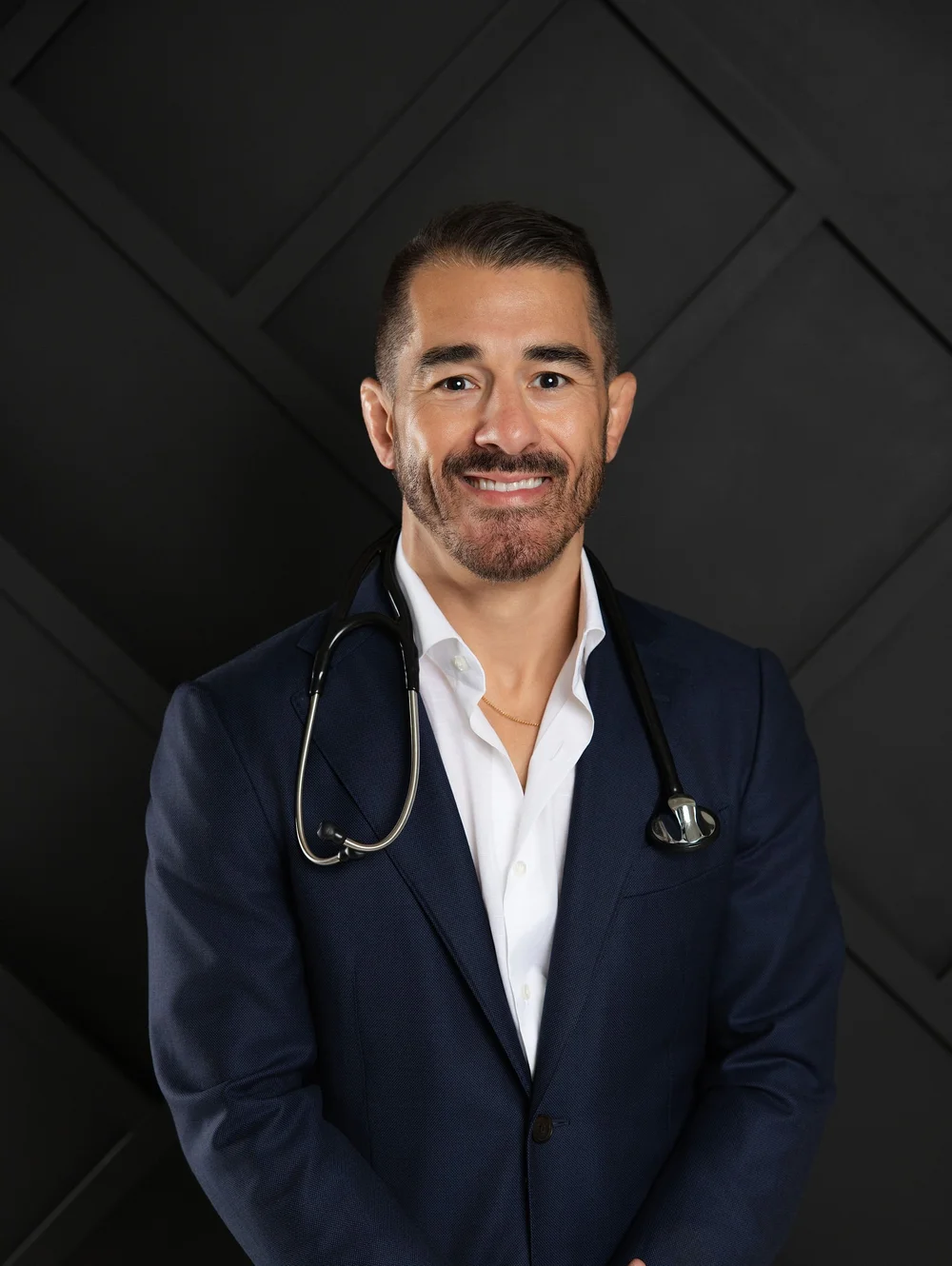
Christian Badillo, MD
Founder & Medical Director
Dr. Badillo sets every protocol, reviews care as the collaborating physician, and sees men's health patients himself.
Meet Dr. Badillo →Which clinician you see depends on where you live. See where we provide care →
Board Certified, Emergency Medicine
Physician and clinical leader in emergency care, medical direction and healthcare operations.
Fellowship-Trained, Emergency Ultrasound
Point-of-care ultrasound for rapid, accurate assessment.
Board Certified, Anti-Aging & Regenerative Medicine (A4M · ABAARM)
Evidence-informed preventive, regenerative and age-management medicine.
Fellow in Longevity Medicine (A4M)
Metabolic health, hormones, performance and long-term disease prevention.
Advanced Metabolic Endocrinology Certification (A4M)
Hormone optimization for both men and women.
Advanced Peptide Therapy Certification (A4M)
The science of peptides for longevity, recovery and performance.
Advanced Weight Management Certification (A4M)
Evidence-based strategies for sustainable fat loss and metabolic health.
How it works
Your path, step by step
-
1
Free discovery call (optional)
Fifteen minutes with our team to choose the right first step.
-
2
Consultation
A 45-minute televisit on your history, symptoms and goals. Our team matches you with the right clinician for your state. You can start with labs instead.
-
3
Morning lab draw
At home with our concierge phlebotomist, or at any Quest or LabCorp, before 10 a.m. and fasting.
-
4
Lab Analysis & Review
About two weeks later, every result explained.
-
5
Your Personalized Plan
Written, with your next lab dates already booked.
-
6
Follow-up
Labs 6–8 weeks after starting or changing treatment, then every 3 to 6 months.
Membership is optional. Continuity is the point.
Hormone care is ongoing: repeat labs, dose adjustments, refills. Membership bundles televisits, concierge blood draws, nurse messaging and member pricing so that care stays on schedule. You can also book visit by visit.
FAQs
Questions men ask us
Can I get testosterone without labs?
No. Therapy starts with testing and an evaluation. That's how we confirm the diagnosis, find the cause and keep you safe.
Will testosterone affect my fertility?
It can. Testosterone therapy lowers sperm production, sometimes to zero. If you want children now or later, we can restore your own production instead, or pair testosterone with hCG.
How long until I notice a difference?
It varies. We recheck labs about 6–8 weeks after starting and adjust from there. Some changes take longer than others, and we'll tell you what to watch for.
Injections or cream: which is better?
Both work. Small subcutaneous injections with an insulin syringe are nearly painless and give steady levels. Cream avoids needles but can transfer to partners and children through skin contact, so it takes care.
Do I need an estrogen blocker (anastrozole)?
Usually not. Estradiol protects your bones, libido and mood. We use anastrozole only for symptoms, at the lowest dose that works.
What is enclomiphene?
A medication that prompts your brain to signal the testes, so your own testosterone rises while sperm production is preserved. It's compounded, not FDA-approved, and we explain the trade-offs. Clomiphene is a retail-pharmacy alternative.
I'm already on TRT from another clinic. Can you take over?
Yes. Send your records, current dose and recent labs. We'll complete an evaluation, review your protocol and adjust if needed. Because testosterone is a controlled substance, we can prescribe only after that evaluation.
Do I need an in-person exam?
Visits are virtual. If you need a hands-on exam, such as a testicular or prostate exam, we'll coordinate it with your primary care doctor or a urologist.
Do I need a membership?
No. You can book visits one at a time. But hormone care works best with regular check-ins, and membership is built for that: included televisits with an updated written plan, concierge blood draws with biometric analysis, nurse messaging between visits, and 10% to 25% off treatments and services. Plans start at $99 a month. Compare plans.
Do you take insurance?
We don't bill insurance for visits, but we provide a superbill you can submit for possible out-of-network reimbursement. Lab work at Quest or LabCorp can be billed by the lab directly to your insurance. We accept credit, debit, HSA and FSA cards, and Zelle. A 3% processing fee applies to card payments.
What does it cost?
Visits, labs and medications are priced separately, and current fees are in our BLL Our Process Handout. We never mark up lab testing.
Get a real answer about your testosterone
Book an Initial Consultation, or start with a free 15-minute discovery call.