
Women's Health · Perimenopause · Menopause
Perimenopause & Menopause Care, Led by a Physician
If you've been told "it's just your age" or "your labs are normal," you deserve a better answer. We take the time to understand what's changing, explain your options in plain language, and offer hormone therapy when it fits, as part of a long-term plan for your heart, bones, brain and energy.
At a glance
Physician-led. Every plan is written and signed by your clinician.
Virtual visits wherever we're licensed. See where we provide care.
At-home blood draws in Chicagoland, parts of Northwest Indiana, Madison (Miami coming soon) or any Quest or LabCorp.
Membership optional. Start with a single visit.
Sound familiar?
Perimenopause rarely announces itself
It often begins in your 40s, sometimes in your late 30s, years before your periods stop. Hormones don't simply decline; they swing. That's why symptoms come and go, and why they're so easy to dismiss.
You don't need every symptom, or a lab "proof," to start the conversation.
- Waking at 2 or 3 a.m. and struggling to fall back asleep
- Hot flashes or night sweats
- Anxiety, irritability or low mood that feels new
- Brain fog or trouble finding words
- Periods that are heavier, closer together or unpredictable
- Weight shifting to your midsection despite the same habits
- Joint aches or lower desire
- Vaginal dryness or urinary changes
Our approach
Not "it's just your age." Not a hormone menu, either.
Women tend to meet one of two extremes: care that dismisses their symptoms, or clinics that sell the same protocol to everyone. We do neither.
What we help with
Care for the whole transition, and what comes after
Perimenopause
Irregular cycles, broken sleep, mood changes and hot flashes, evaluated in the context of your history rather than a single lab value.
Menopause
Symptom relief and long-term protection, with a clear conversation about whether, when and how to use hormone therapy.
Hormone therapy (HRT)
Transdermal estrogen, oral progesterone, and low-dose testosterone when appropriate, in compounded or retail forms, whichever fits you best.
Low libido & sexual health
We review hormones, medications, thyroid, sleep and context first. Options include low-dose testosterone, vaginal estrogen or DHEA, and bremelanotide (PT-141), FDA-approved as Vyleesi for low desire in premenopausal women.
Sleep, mood & energy
Oral progesterone's calming effect at bedtime, a home sleep test when sleep apnea is possible, and a close look at iron, thyroid and cortisol.
Weight & metabolism
Midlife weight gain has real biology behind it. We measure body composition, insulin resistance and lipids, and consider GLP-1 medication when it fits, with protein and strength training to protect muscle.
Bone & heart health
Losing estrogen speeds bone loss and changes cardiovascular risk. We track ApoB, Lp(a) and related markers, and add bone density or coronary calcium testing when it adds value.
Vaginal & urinary health
Dryness, painful sex and recurring urinary symptoms are common and treatable. Local vaginal estrogen or DHEA works where it's needed.
Diagnosis
How we evaluate perimenopause and menopause
Perimenopause is a clinical diagnosis. During the transition, estrogen and FSH can swing widely from one week to the next, so one "normal" result can't rule it out. We start with your symptoms, cycle history and goals, then use labs to rule out look-alikes and set a baseline for safe treatment.
Timing: Still having periods? We schedule your draw about one week before your next period is expected. If your periods have stopped, any day works.
Myth vs. fact
"My FSH was normal, so I'm not in perimenopause."
A single FSH can look normal in the middle of perimenopause. Your symptoms and cycle pattern tell us more.
Your first labs usually include
Hormones
FSH and LH, estradiol and progesterone, total and free testosterone with SHBG, and DHEA-S, using precise LC-MS/MS testing where it matters.
Look-alikes
A thyroid panel (TSH, free T4, free T3, antibodies), iron and ferritin, vitamin D and B12.
Metabolic & heart health
CBC, comprehensive metabolic panel, A1c and fasting insulin, and lipids with ApoB and Lp(a).
When it adds value
4-point salivary cortisol, DUTCH urine hormone testing, or a home sleep study.
Treatment
Hormone therapy and other treatment options
Your plan is built around your symptoms, history and goals. For most women, our starting point is estrogen through the skin, paired with oral micronized progesterone if you have a uterus: the combination with the most favorable risk profile. Each can be compounded to your needs or filled at a retail pharmacy.
Estrogen through the skin
Compounded BiEst (estriol + estradiol) cream dosed to you, or an estradiol patch, gel or spray. Transdermal estrogen bypasses the liver and hasn't been linked to the higher clot and stroke risk seen with oral estrogen.
Oral micronized progesterone
Taken at bedtime. It protects the uterine lining when you use estrogen, and many women notice better sleep. The retail capsule contains peanut oil, so if you're allergic, we have it compounded without it.
Testosterone for women
A low-dose cream for low desire after menopause, kept within the female range. There's no FDA-approved testosterone product designed for women in the U.S., so compounding is how we dose it precisely for a woman's physiology.
Vaginal estrogen & DHEA
Local therapy for dryness, painful intercourse and urinary symptoms.
DHEA
Small doses when DHEA-S is low and your symptoms fit, far less than most over-the-counter capsules contain.
GLP-1 medications
Semaglutide or tirzepatide when weight and insulin resistance are part of the picture, always paired with protein and resistance training.
Peptide therapy
When there's a clear reason, sourced from licensed pharmacies only. Never "research-use-only" products.
Supplements & lifestyle
A personalized supplement plan through Fullscript, plus sleep, nutrition and strength-training priorities.
Compounded medications
Tailored to you, from pharmacies we vet carefully
Many women need a hormone in a strength, form or combination that retail pharmacies don't carry, and some, like estriol or a woman's dose of testosterone, aren't available at retail at all. Compounding lets us tailor your prescription: an exact dose between standard strengths, a blend such as BiEst, a cream instead of a capsule, or a formula made without the preservatives, dyes, peanut oil or other ingredients you're sensitive to.
We partner only with licensed, carefully vetted compounding pharmacies. They source ingredients from FDA-registered facilities, sterility-test injectable products and provide a certificate of analysis on request. If a pharmacy won't document its supply chain, we don't use it.
Compounded medications are prepared for you individually and aren't FDA-approved products, so we always tell you what you're taking, why we chose it, and how we'll monitor it.
Who hormone therapy may not be right for
- A history of breast cancer or another estrogen-dependent cancer
- Unexplained vaginal bleeding (this must be evaluated first)
- A prior blood clot, pulmonary embolism or clotting disorder
- A prior stroke, heart attack or known heart disease
- Active liver disease, or pregnancy
If hormones aren't right for you, we'll talk through other ways to relieve your symptoms.
Bioidentical hormones: what the term really means
"Bioidentical" means a hormone is chemically identical to the one your body makes. Estradiol, estriol and progesterone are all bioidentical. Some come as retail products; others, like estriol and BiEst, are available only through compounding.
We choose the form that fits you best. "Bioidentical" doesn't mean risk-free: the dose, the route and how carefully you're monitored matter more than the label.
Safety
Is hormone therapy safe? What's changed
Much of the fear around hormone therapy traces to the 2002 headlines from the Women's Health Initiative. The findings came from women who were 63 on average, taking oral conjugated estrogen with a synthetic progestin, which is not the regimen most women use today. In February 2026, the FDA began approving updated labels for menopausal hormone therapy products that remove boxed-warning statements about cardiovascular disease, breast cancer and probable dementia. The warning about taking estrogen without a progestogen, and the risk of endometrial cancer, remains.
Timing matters. For most healthy women, the balance of benefit and risk is most favorable when therapy starts before age 60 or within about 10 years of the final period.
None of this makes hormone therapy risk-free. It means the decision is yours, made with real numbers and revisited every year.
How we monitor
- A symptom score at baseline and at every visit
- A recheck 6–8 weeks after starting or changing a dose
- Mammogram and cervical screening kept current (non-negotiable)
- Any unexpected bleeding evaluated promptly
- Blood pressure, lipids, metabolic labs, and bone density when indicated
- A yearly conversation about whether to continue, and at what dose
Long-term health
Your next 30 years, not just the next 30 days
Midlife is when women's cardiovascular risk climbs and bone loss speeds up. Your plan looks ahead: advanced cholesterol markers like ApoB and Lp(a), coronary calcium scoring when it helps, bone density, and a cancer screening roadmap that puts proven tests first, starting with 3D mammography at 40.
How it works
Your path, step by step
-
1
Free discovery call (optional)
Fifteen minutes with our team to choose the right first step.
-
2
Initial Consultation
A 45-minute televisit to review your history, symptoms and goals. Prefer to start with labs? You can.
-
3
Lab draw
At home or work with our concierge phlebotomist, or at any Quest or LabCorp. Still cycling? We time it to about a week before your period.
-
4
Lab Analysis & Review
About two weeks after your draw, a televisit that walks through every result.
-
5
Your Personalized Plan
A written roadmap after every visit: what your labs mean, recommended testing, supplements and treatment.
-
6
Follow-up
A recheck 6–8 weeks after starting hormones, then every 3 to 6 months as things settle.
Who you'll see
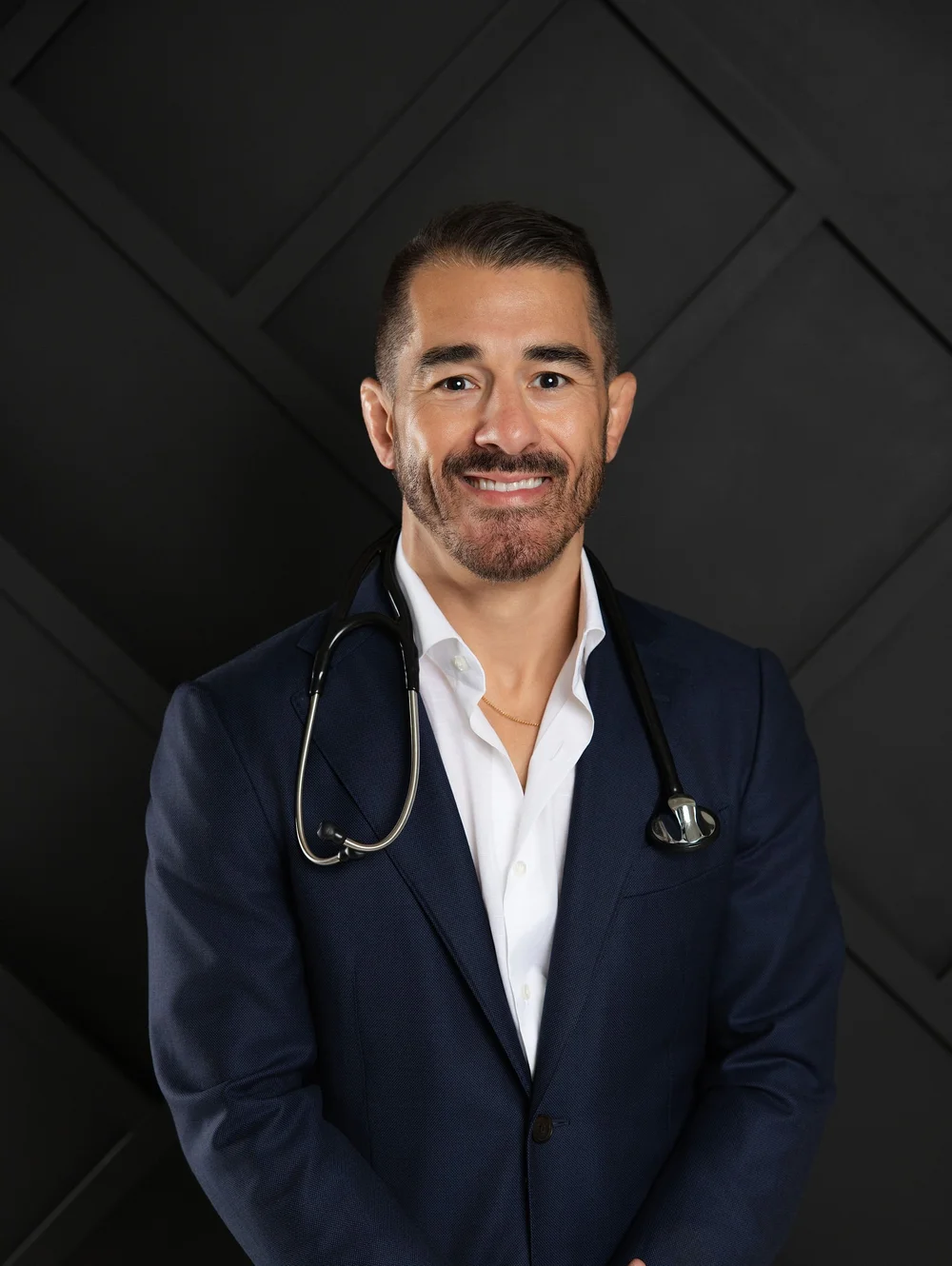
Christian Badillo, MD
Founder & Medical Director
Dr. Badillo pairs the diagnostic discipline of emergency medicine with advanced training in hormone, metabolic and longevity medicine. He listens first, explains your results in plain language, and sends you a written plan after every visit.
Our clinical team handles at-home blood draws and helps with questions between visits.
Meet Dr. Badillo →Board Certified, Emergency Medicine
Experienced physician and clinical leader with a background in emergency care, medical direction and healthcare operations.
Fellowship-Trained, Emergency Ultrasound
Specialized training in point-of-care ultrasound for rapid assessment, diagnostic accuracy and informed clinical decisions.
Board Certified, Anti-Aging & Regenerative Medicine (A4M · ABAARM)
Advanced knowledge in evidence-informed preventive, regenerative and age-management medicine.
Fellow in Longevity Medicine (A4M)
Advanced fellowship training across metabolic health, hormones, performance and long-term disease prevention.
Advanced Metabolic Endocrinology Certification (A4M)
Hormone optimization for both men and women.
Advanced Peptide Therapy Certification (A4M)
The science of peptides for longevity, recovery and performance.
Advanced Weight Management Certification (A4M)
Evidence-based strategies for sustainable fat loss and metabolic health.
Membership is optional. Continuity is the point.
You can work with us visit by visit. Many women choose membership because hormone care works best with regular check-ins: scheduled televisits with an updated written plan, concierge blood draws with biometric analysis, nurse messaging, and member pricing on treatments.
FAQs
Questions women ask us
Am I too young for perimenopause?
Probably not, if you're in your late 30s or 40s and something has changed. Symptoms often start years before periods stop, and the transition can last several years. We take your symptoms seriously at any age and rule out other causes.
Do I need labs to start treatment?
Yes. Labs don't diagnose perimenopause on their own, but we review them before prescribing to rule out other causes, check safety markers and set a baseline. If you've had labs in the past few months, send them to us.
Is hormone therapy safe?
For healthy women with bothersome symptoms who start before 60 or within about 10 years of their final period, the benefits generally outweigh the risks. Your history matters, so we review it with you and revisit the decision every year.
Are bioidentical hormones safer?
"Bioidentical" describes the molecule, not the safety. Retail estradiol and progesterone are bioidentical, and so are compounded hormones like BiEst. Dose, route and monitoring matter most.
Do you prescribe compounded hormones?
Yes, often. Compounding lets us match the dose and form to you and leave out ingredients you can't tolerate. We work only with licensed, carefully vetted compounding pharmacies, and we always tell you whether a medication is compounded or retail.
Will progesterone cream protect my uterus?
Not reliably. If you have a uterus and take estrogen, oral micronized progesterone (or a levonorgestrel IUD) is what's proven to protect the uterine lining. Progesterone cream can still help with other symptoms.
Can women take testosterone?
Yes, at low doses and with monitoring. International consensus supports it for low sexual desire after menopause. Because there's no FDA-approved product for women in the U.S., it's compounded and dosed to stay within the female range.
Do you offer hormone pellets?
No. Pellets are placed in an in-office procedure, and our care is virtual. We also prefer options we can fine-tune: a patch, gel, cream or capsule can be adjusted at your next recheck, while a pellet's dose can't be changed once it's placed.
Will you work with my OB-GYN?
Yes. We're glad to share your plan with your OB-GYN or primary care doctor. Pelvic exams and Pap tests stay with your OB-GYN; we can order screening mammograms and make sure everything is current. Full Concierge membership includes hands-on care coordination, and Individualized members can add it.
Do I need a membership?
No. You can book visits one at a time. But hormone care works best with regular check-ins, and membership is built for that: included televisits with an updated written plan, concierge blood draws with biometric analysis, nurse messaging between visits, and 10% to 25% off treatments and services. Plans start at $99 a month. Compare plans.
Do you take insurance?
We don't bill insurance for visits, but we provide a superbill you can submit for possible out-of-network reimbursement. Lab work at Quest or LabCorp can be billed by the lab directly to your insurance. We accept credit, debit, HSA and FSA cards, and Zelle. A 3% processing fee applies to card payments.
What does it cost?
Visits, labs and medications are priced separately, and current fees are in our BLL Our Process Handout. We never mark up lab testing, and our Master Lab Testing Menu shows which tests are usually covered by insurance, so you can check before your draw.
Ready for real answers?
Book an Initial Consultation, or start with a free 15-minute discovery call.